Strategy
When to Kill Your Product (And When to Double Down)
Deciding when to kill your product means comparing the value of the next investment with the evidence you have. Money already spent cannot make the next release worthwhile.
I would separate weak acquisition from weak product value before recommending continue, pivot, or stop. A small cohort can suggest a problem, but it cannot establish a universal threshold.
This guide gives you five signals, a decision framework, and a bounded next experiment. Use your own baseline and a written review date so the criteria cannot drift after the results arrive.
TL;DR — the whole guide in five lines:
- The sunk cost fallacy kills more startups than bad ideas — knowing when to stop is a discipline, not a defeat.
- Five kill signals: enthusiasm without action, vitamin problems, a shrinking market, edge-case superfans, and unit economics that never work.
- Five double-down signals: organic growth, users hacking your product, high retention, customers paying without haggling, and fast learning.
- Score all five dimensions and follow the tally — 4–5 kill signals means the hard conversation; 3+ double-down signals means invest aggressively.
- Once you decide to kill, execute in weeks, not months — a slow death burns the team and the budget.
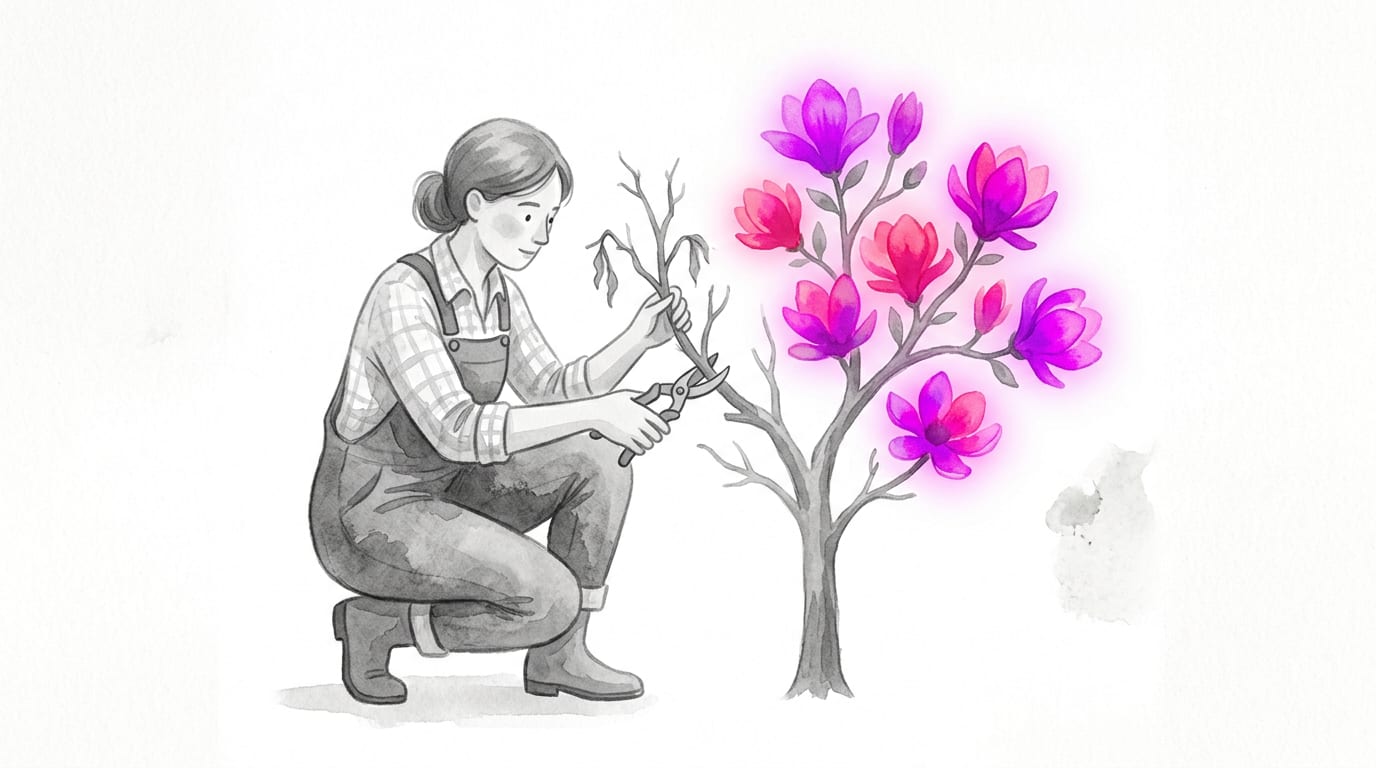
The three possible calls, at a glance:
| The call | The tell | First move |
|---|---|---|
| Kill | Effort keeps rising, user behavior stays flat | Set the end date and tell the team straight |
| Pivot | Some segments love it, most shrug | Redesign the approach, keep the mission |
| Double down | Users return, pay, and refer without being pushed | Invest aggressively while the signal is hot |
What is a product kill decision?
A product kill decision stops further investment in the current offer or scope. It should include the evidence, alternatives considered, user obligations, and conditions for revisiting the decision.
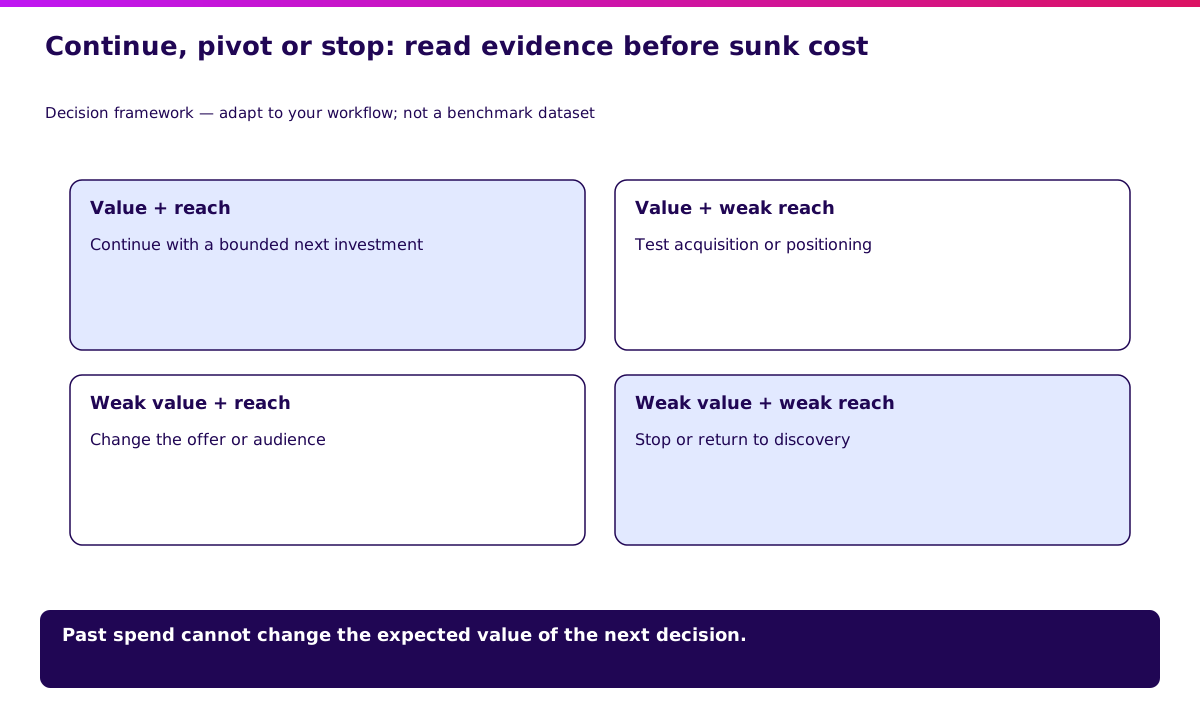
Here’s a counterintuitive truth: having a kill switch makes you more likely to succeed.
Why? Because when you know you can stop, you make better decisions along the way. You run real experiments — a prototype, pilot, or MVP matched to your biggest risk — instead of confirmation-bias theater. You listen to users instead of defending your assumptions.
At Synetica, we build the kill-or-continue decision into our Blueprint & Prototype decision gate. At the end of every validation cycle, we ask one question:
“Based on what we learned, should we continue investing?”
Blueprint evidence supports a continue, adjust, wait, or stop decision. Conversion targets are internal goals, not demonstrated client outcomes in this article.
When should you kill your product? Five signals to review
These are review prompts, not a statistically validated prediction rule. Investigate the causes before choosing the next investment.
1. Users Say Yes But Don’t Act
The most dangerous feedback is enthusiasm without action.
“I love this idea!” means nothing if they won’t sign up, pay, or even give you their email. Words are cheap. Behavior is truth.
The test: Can you get 10 users to take a real action (pay, sign up, refer) without begging? If it takes heroic effort to get basic engagement, the problem isn’t your funnel—it’s your product.
2. You’re Solving a Vitamin Problem
Not all problems are equal. Some problems are painkillers—urgent, painful, must-solve.
Others are vitamins—nice to have, maybe someday.
Vitamins don’t sell. Painkillers do.
The test: Ask users what they’d do if your product disappeared tomorrow. If the answer is “find an alternative immediately,” you have a painkiller. If it’s a shrug, you have a vitamin.
3. The Market Keeps Shrinking
You started with “everyone needs this.” Then it became “small businesses need this.” Then “small businesses in Indonesia.” Then “small F&B businesses in Jogja.”
If your addressable market keeps getting smaller as you learn more, that’s a red flag. You’re not finding your niche—you’re running out of people who care.
4. Your Best Users Are Edge Cases
Look at your most engaged users. Are they representative of your target market, or are they weird outliers?
If your product only resonates with a handful of unusual users, you don’t have product-market fit. Check whether this is a valuable niche or a sample that cannot support your plan.
5. The Unit Economics Never Work
Revenue is vanity. Profit is sanity.
If every customer costs you more to acquire than they’ll ever pay, no amount of scale fixes that. “We’ll make it up in volume” is the last words of a dying company.
Next: The 5 Signals to Double Down.
The 5 Signals to Double Down
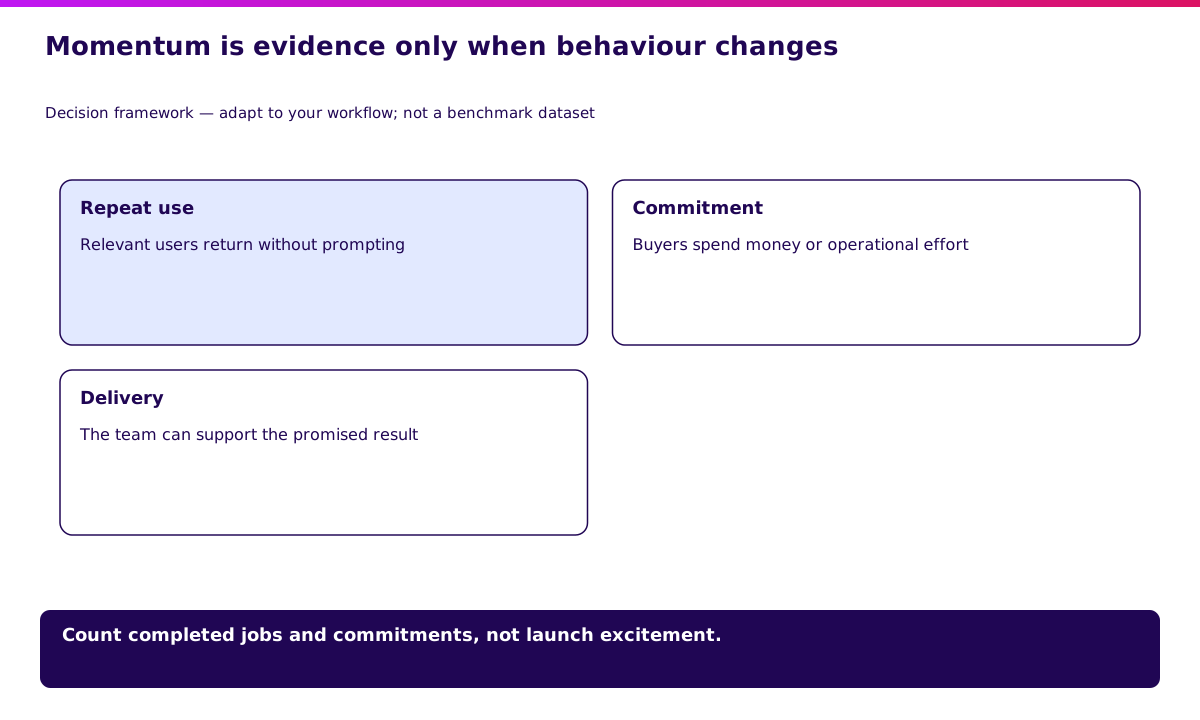
Now the good news. These are the signals that say “pour fuel on this fire” — and behavior, not enthusiasm, is what qualifies each one.
1. Organic Growth Without Trying
Users are finding you without ads. They’re telling friends.
They’re posting about you on social media without being asked.
This is the rarest and most valuable signal. If people voluntarily spread your product, you’ve touched something real.
2. Users Hack Your Product
When users create workarounds to do things you didn’t intend, pay attention. They’re telling you what they actually want.
The best product insights come from watching what users do, not what they say. If they’re bending your product to fit their needs, you’ve found a real need.
3. High Retention, Even If Growth Is Slow
A product with 1,000 users who come back every day is more valuable than a product with 100,000 users who churned last month.
Retention is the ultimate test. If people keep using your product without constant reminders, you’ve built something sticky.
4. Customers Pay Without Negotiating
When users pay your asking price without haggling, you’ve found value-market fit.
If every sale requires a discount, a pilot program, or extensive convincing, you’re pushing water uphill. When users pull out their wallet easily, you’re onto something.
5. You’re Learning Fast
Even if the metrics aren’t perfect yet, are you learning? Is each experiment teaching you something new?
The best products iterate quickly. If every week brings new insights and clear next steps, you’re on the right path—even if you haven’t cracked the code yet.
Next: The Framework: A Decision Matrix.
The Framework: A Decision Matrix
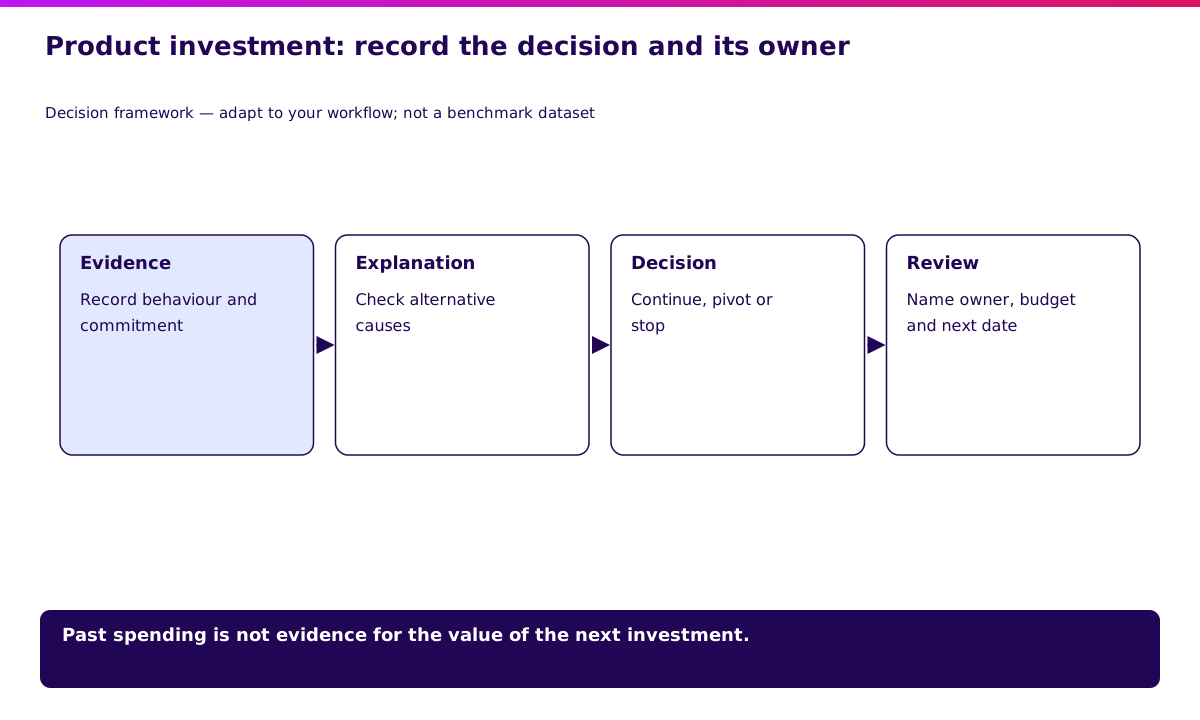
Here’s how we think about the kill-or-continue decision:
| Signal | Kill | Pivot | Double Down |
|---|---|---|---|
| User engagement | Low, despite effort | Mixed—some segments love it | High and growing |
| Willingness to pay | Can’t find paying users | Some pay, most don’t | Users pay easily |
| Market size | Keeps shrinking | Static but niche | Large and growing |
| Unit economics | Negative, no path to positive | Break-even possible | Positive or clear path |
| Learning velocity | Stuck, no new insights | Learning but slowly | Fast iterations |
Scoring:
- 4-5 “Kill” signals → Have the hard conversation
- 3+ “Pivot” signals → Redesign the approach, not the mission
- 3+ “Double Down” signals → Invest aggressively
Count the column where most of your signals land — the tally turns a gut feeling into a decision.
Validate it in 2 weeks. A Blueprint session turns this thinking into a tested prototype in front of real users — see how Blueprint & Prototype works.
How to Kill Well
If you decide to stop, do it with integrity — honestly, documented, clean, and fast.
-
Be honest with your team. Don’t sugarcoat. “The data says this isn’t working” is more respectful than false hope.
-
Document what you learned. Every failed product has lessons. Write them down. They’ll make your next attempt better.
-
Shut down cleanly. If you have users, give them notice. Offer data exports. Don’t ghost.
-
Don’t burn the assets. Code, designs, user research—these have value. Archive them properly.
-
Move fast. The worst thing you can do is a slow death. Once you’ve decided, execute within weeks, not months.
Next: What I Would Put in a Stop Recommendation.
What I Would Put in a Stop Recommendation
My recommendation: I would stop the next investment when the agreed test fails and no bounded follow-up can resolve the uncertainty at a reasonable cost.
Record the failed assumption, test conditions, alternative explanations, and what would justify reopening the decision. A stop recommendation should be reviewable, rather than a reaction to one disappointing metric.
The Blueprint & Prototype decision gate is designed to collect that evidence before a production commitment. Stopping is one possible outcome; changing the task, audience, or test may be more appropriate.
What Comes After
Killing a product isn’t the end. It’s a reallocation of resources toward something better.
Stopping an unsupported investment can free resources for a better test. That’s not failure—it’s the process.
The question isn’t “did you fail?” It’s “did you learn?”
And if you learned what doesn’t work, you’re one step closer to finding what does.
Next: Make the Call with Confidence.
Make the Call with Confidence
The hardest part of the kill decision is uncertainty. What if you’re wrong?
What if success was just around the corner?
That’s why we built our methodology around data, not hope. When you’ve run real experiments with real users, the decision becomes clearer.
If you’re facing this decision right now—whether to kill, pivot, or double down—let’s talk. We’ll help you read the signals honestly and make the call with confidence.
Because sometimes the best thing you can build is the courage to stop building.
FAQ
When should you kill a product?
Kill a product when user engagement, willingness to pay, unit economics, and learning velocity keep pointing in the wrong direction after honest experiments.
When should you pivot instead of kill?
Pivot when one segment, workflow, or use case shows signal but the current product shape is not strong enough to scale.
What metrics matter before killing a product?
Track engagement, retention, willingness to pay, acquisition cost, support burden, unit economics, and whether each experiment still teaches you something useful.
How can you make the decision less emotional?
Define the kill, pivot, and double-down signals before running validation. Then let the evidence make the argument.
Sources
- CB Insights: The Top Reasons Startups Fail
- Harvard Business Review: Why the Lean Start-Up Changes Everything
Related Posts
Synetica helps founders and businesses validate direction in 2 weeks, build validated production scope in 8 weeks, then launch and grow through an ongoing monthly loop. Our Blueprint phase is specifically designed to answer the “should we build this?” question before you invest in development.
Two weeks to a real answer
Need help putting this into practice?
Book a Blueprint session and we'll turn the ideas in this article into a tested prototype in front of real users—2 weeks, from $3,000.