Guide
App Development Cost in Indonesia: An Honest 2026 Breakdown
App development cost in Indonesia has no single market price, because what you pay for is scope: workflows, user roles, integrations, testing, and support after launch. This guide gives you a breakdown you can use to read and compare quotes, without selling a number that looks more certain than it is.
I’m Ganis, founder of Synetica, a tech-based business consultancy. Every figure here is a planning simulation in rupiah, not a survey of Indonesian prices, not a client result, and not a Synetica quote. The goal is simple: show which questions to answer before a number appears in a proposal.
You’ll get a scope definition, three budget bands, a build-cost breakdown, the factors that move price, a buy-or-build decision flow, a milestone payment schedule, and a list of red flags.
TL;DR — the whole guide in five lines
- Price follows scope, not screen count: ask for workflows, roles, integrations, and exclusions in writing.
- In our simulation, an IDR 184m build becomes IDR 240m in year one once hosting, support, and changes are counted.
- Discovery is 6.5% of the build yet protects the other 93.5% from rework.
- Pay against evidence: tie each milestone to a prototype, demo, and release you have accepted.
- Validate first, price custom work second: a two-week Blueprint & Prototype turns assumptions into countable scope.
What does app development cost include?
App development cost covers all the work that makes a business workflow safe to use, not only writing code. A healthy quote names each component below or states that it is excluded.
- Discovery and specification: the workflow, rules, exceptions, and definition of done.
- UI/UX design: key screens, error states, and a prototype users can test.
- Development: business logic, roles and permissions, reports, and integrations.
- QA and UAT: functional tests, permission tests, and acceptance by your business team.
- Release and security: environments, monitoring, backups, and handover documentation.
- After launch: hosting, third-party subscriptions, bug fixes, and new changes.
The components most often missing from cheap quotes are discovery, UAT, and support. That does not mean the vendor acts in bad faith; the scope simply has not been fully written down.
If you need a company website, start with our website development guide. To choose a development team, read the software house guide.
How much does an app cost in Indonesia? Three budget bands
Use these bands to pick a budget class, not to haggle. The figures are illustrative planning ranges that assume design, development, and testing are included.
| App class | Example scope | Illustrative budget | Planning duration | Best fit |
|---|---|---|---|---|
| Single workflow | One internal workflow, one platform, no integration | IDR 40–90m | 4–8 weeks | A stable brief and a decision owner |
| Custom operational app | Several roles, approvals, reports, one integration | IDR 150–350m | 10–16 weeks | A Growing Business replacing manual coordination |
| Connected system | Data migration, multiple integrations, mobile and web, phased rollout | IDR 400m–1bn+ | 4–8 months | Several departments sharing operational data |
Hosting, third-party subscriptions, applicable taxes, data cleanup, and ongoing support usually need their own line items. A large migration can change both cost and duration significantly.
These durations are not Synetica’s standard offer. Our path, two weeks of Blueprint & Prototype then eight weeks of Production Grade Software, applies to a scope that has been agreed and validated. Define that scope through Blueprint & Prototype before asking for a production commitment.
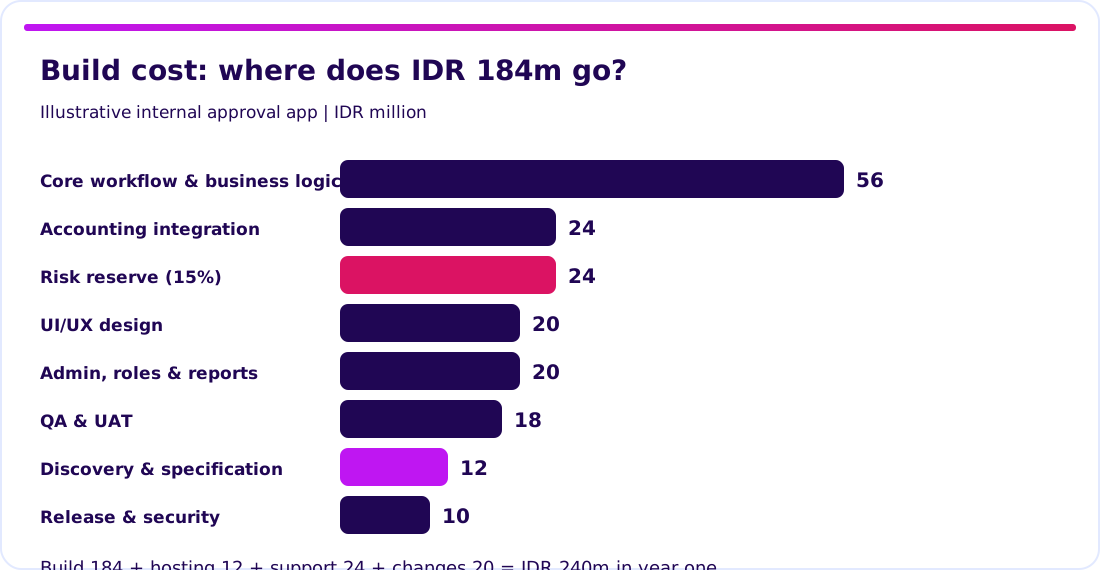
What does an app build cost? A simulated internal approval app
One concrete example beats a wide range. Picture a purchase-approval app for a company with three roles, one accounting integration, and monthly reports. Here is the simulated breakdown in IDR million.
| Component | IDR m | Share of build |
|---|---|---|
| Core workflow and business logic | 56 | 30.4% |
| Accounting integration | 24 | 13.0% |
| UI/UX design | 20 | 10.9% |
| Admin, roles, and reports | 20 | 10.9% |
| QA and UAT | 18 | 9.8% |
| Discovery and specification | 12 | 6.5% |
| Release and security | 10 | 5.4% |
| Risk reserve (15% of 160) | 24 | 13.0% |
| Total build | 184 | 100% |
The first seven components add up to 56 + 24 + 20 + 20 + 18 + 12 + 10 = 160. A 15% reserve is 160 × 0.15 = 24, so the build is 184.
Cost does not stop at release. Add hosting and subscriptions of IDR 12m, support of IDR 24m (IDR 2m a month), and post-release changes of IDR 20m. Year-one total: 184 + 12 + 24 + 20 = IDR 240m.
Now test the assumption. If discovery is skipped and a misunderstanding forces 30% of the core workflow to be redone, the cost is 56 × 30% = IDR 16.8m, more than the IDR 12m discovery. That is a scenario, not a forecast: it shows how a small early saving can be repaid later at a premium.
The model excludes downtime, delayed revenue, and taxes. Add a cost only when you can explain its basis.
Bring your scope and cost assumptions to a scoping conversation.
What factors drive app development pricing?
Price moves with the complexity you ask for, not with the word “app.” This table shows the add-ons that appear most often, with illustrative planning figures.
| Factor | Why it adds cost | Illustrative addition |
|---|---|---|
| User roles with different flows | Each role needs its own screens, permissions, and tests | IDR 6–10m per role |
| Third-party integration | Needs data mapping, error handling, and two-way tests | IDR 15–30m per integration |
| Mobile app on a second platform | Two interfaces and two release paths | IDR 40–60m |
| Legacy data migration | Cleaning, mapping, and reconciliation | IDR 15–40m |
| Custom reports and dashboards | Metric definitions, queries, and number validation | IDR 8–20m |
| Security and audit demands | Logging, extra testing, and documentation | IDR 10–25m |
Most of these are scope decisions. Separate what the first release needs from what can wait; that is the most honest way to lower the price without cutting testing.
For security demands, NIST’s SSDF v1.1 offers a shared vocabulary for secure development practices that buyers and suppliers can discuss; it is a reference, not a certification. For legal obligations such as personal-data protection, ask the vendor which controls they build, then confirm your legal duties with a qualified adviser.
Buy, assemble, or build custom? A decision flow before you ask for a quote
Custom software answers a process that differentiates your business, not every problem. Answer these three questions in order.
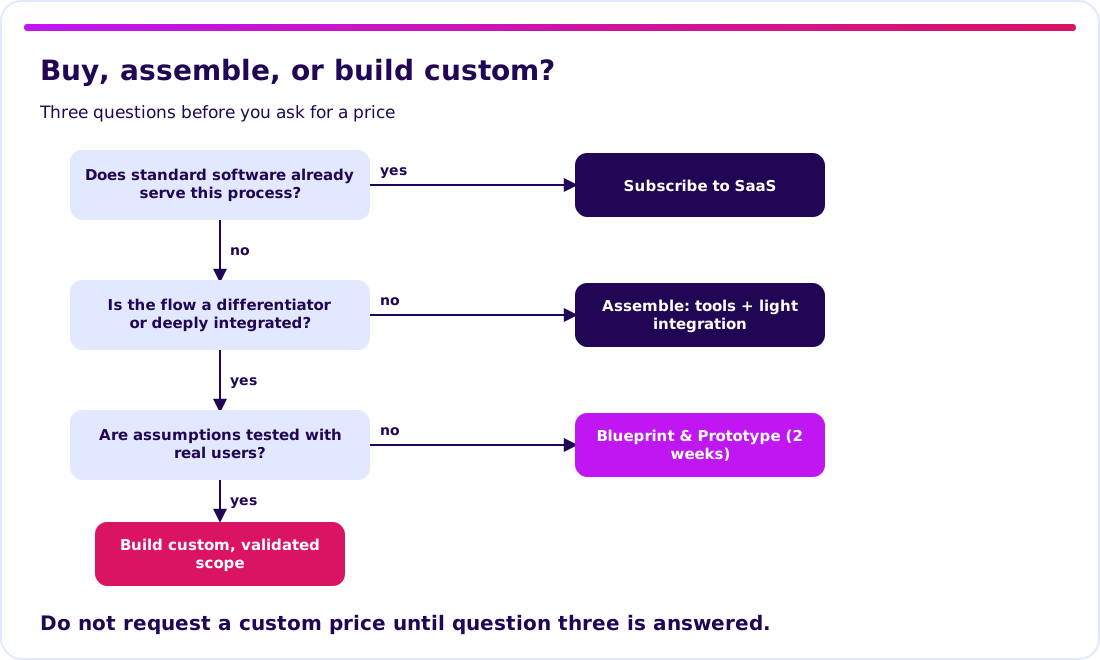
If standard software already serves your process, a subscription is almost always cheaper and faster. If the flow is not unique, assemble existing tools with light integration. Consider custom only when the flow differentiates your business or needs deep integration.
The third question is the one most often skipped: have the assumptions been tested with real users? If not, test first. Compare it with our build vs buy guide and the custom software development guide.
Validate it in 2 weeks. Before committing a large budget to an app, we test the assumptions through Blueprint & Prototype: a specification, a prototype users can try, and cost figures based on real scope.
How do you choose an app development partner (not just the cheapest)?
Compare quotes on the same scope, exclusions, and support, then look at price. Three common partner types each have a place.
| Partner type | Strength | Risk to check | Best fit |
|---|---|---|---|
| Freelancer | Flexible, lower cost | Continuity when the person is unavailable | Small, stable scope |
| Delivery vendor | Team capacity for a clear specification | An unclear spec turns into change-request cost | You already have a product owner |
| Consultancy plus execution | Decides what to build, then builds it | Needs evidence of method and handover | A Growing Business that needs clarity first |
These are engagement models, not quality rankings. One person with a precise brief can fit better than a large team with no decision owner. Our method for connecting specifications, tests, and validation is in how we develop software without AI slop; a buying checklist is in software vendor due diligence.
What is the process and timeline from brief to launch?
An honest schedule names dependencies and decision gates, not just a launch date. Synetica’s path follows the 2B2G sequence: two weeks of Blueprint & Prototype, eight weeks of Production Grade Software, then monthly Launch & Grow. The validated path from idea to release is 10 weeks, provided access, decisions, and scope are ready.
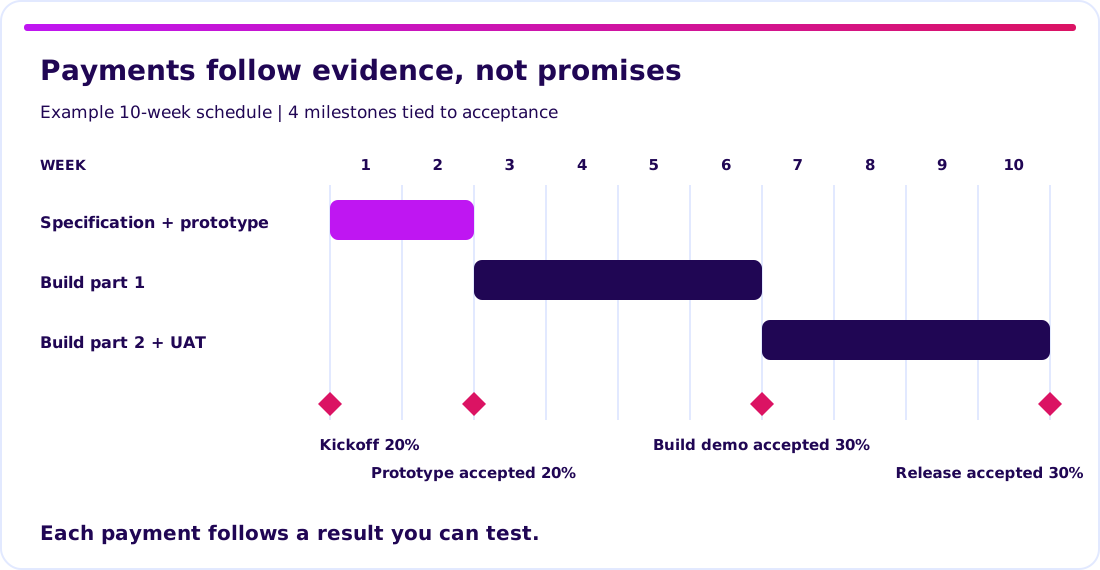
The 20/20/30/30 milestone split above is a suggested structure for you, not Synetica’s price or payment policy. The principle: each payment follows a result you can test, from an accepted prototype to an accepted release.
Complex integrations or large migrations need an explicitly adjusted schedule. Review the validated production phase with your access, integrations, and approvals ready.
What are the red flags when comparing app development costs?
A red flag is an unanswered operational question, not a low price. Slow down when a candidate cannot show:
- How “done” is accepted for one real workflow.
- Which integrations, migrations, and support items are excluded.
- Who owns delivery decisions and who is the backup.
- How your team receives code, access, and documentation.
- What happens after a failed deployment.
- What one extra role or integration costs after release.
A fixed price with no list of exclusions can look safe while simply moving cost into change requests. Ask for the exclusions in writing before you compare numbers.
What I would do before asking for an app quote
I would send every candidate one workflow, one acceptance example, and one support expectation. That produces a useful comparison sooner than a long feature wishlist.
For Growing Businesses, prioritize operational integration, handover, and year-one cost. For Dreamers, check first whether an existing tool or a small prototype can answer the business question before funding a custom build.
Synetica combines strategy and execution. The fastest path from ideas to user signal starts with a focused test, then a deliberate build decision.
Your next step: bring your riskiest workflow to Blueprint & Prototype.
FAQ — App Development Cost
How much does it cost to build an app in Indonesia?
Our illustrative budgets run from IDR 40–90m for a single simple workflow to IDR 150–350m for a custom operational app and IDR 400m–1bn+ for a connected system. These are planning scenarios, not market rates or Synetica quotes.
Why do app development quotes differ so much between vendors?
Usually the counted scope differs: discovery, UAT, integration, and support may be in one quote and absent from another. Match scope and exclusions before comparing numbers.
How long does custom app development take?
It depends on scope and readiness. Synetica’s validated path uses two weeks of Blueprint & Prototype and eight weeks of Production Grade Software, then monthly Launch & Grow. A large migration needs its own schedule.
What costs come on top of building the app?
Hosting, third-party subscriptions, support, fixes, and post-release changes. In our simulation, an IDR 184m build becomes IDR 240m in year one.
What is the difference between a software house and a freelancer?
A freelancer usually offers an individual’s capacity; a software house can supply a coordinated team. Check actual coverage and responsibilities in both cases. Neither label guarantees quality or continuity.
Related Posts
Two weeks to a real answer
Need help putting this into practice?
Book a Blueprint session and we'll turn the ideas in this article into a tested prototype in front of real users—2 weeks, from $3,000.